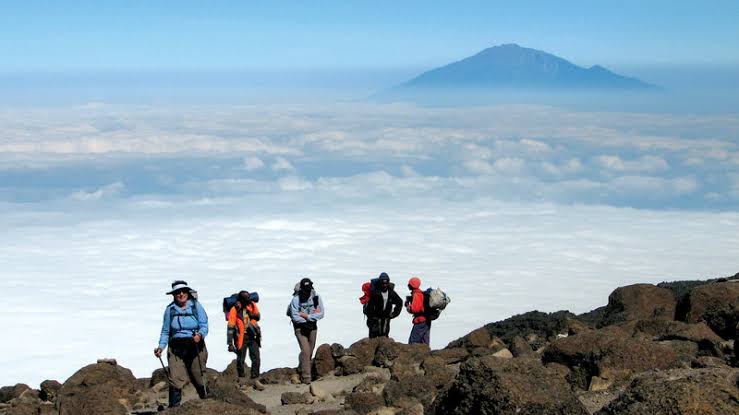
• Kilimanjaro trek

Kilimanjaro Northern Circuit Route

Kilimanjaro trek · 9 days on the mountain / 11 days / 10 nights

Private, tailor-made and planned by local guides in Arusha.

  1. Home
  2. Kilimanjaro Trekking
  3. Kilimanjaro Northern Circuit Route
Back to Home

Kilimanjaro Northern Circuit Route

Kilimanjaro's longest and quietest route, circling almost the whole mountain on its wild northern slopes — nine days on the mountain for the best acclimatisation and the highest chance of success.

  • Longest route — best acclimatisation
  • Circle the quiet northern slopes
  • Views from Kenya to the Shira Plateau
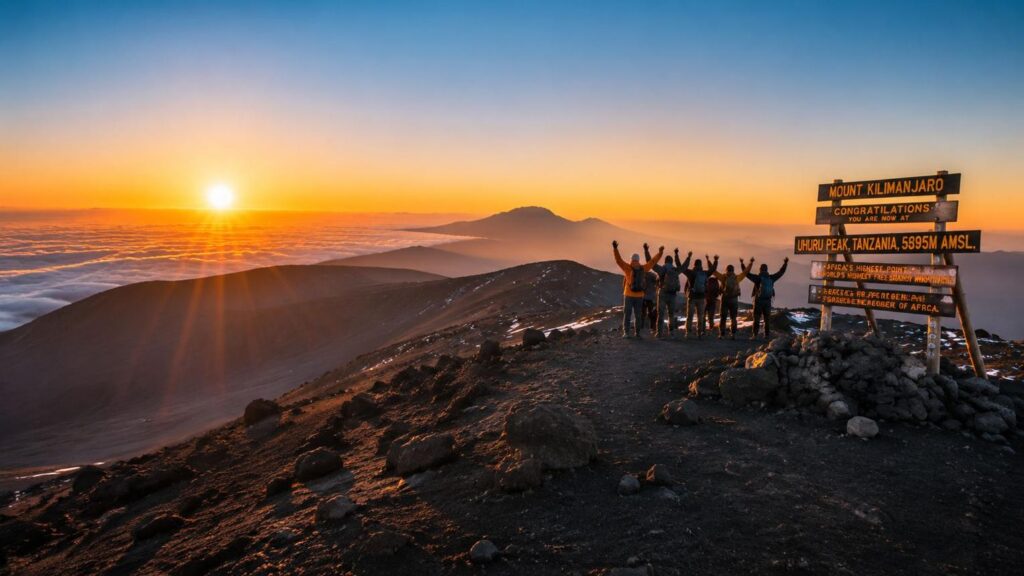
  • Sunrise on Uhuru Peak, 5,895 m

Make your dream trip come true with Lion Whisper

Every sample itinerary can be changed to suit you. Our local guides work with you to plan the trip you really want.

Request this trip now

Itinerary

  1. Day 1: Arrive at Kilimanjaro — welcome briefing
  2. Day 2: Londorossi Gate to Mti Mkubwa — the western rainforest
  3. Day 3: Mti Mkubwa to Shira 1 — onto the plateau
  4. Day 4: Shira 1 to Shira 2 — crossing the Shira Plateau
  5. Day 5: Shira 2 to Moir Hut via Lava Tower — climb high, sleep low
  6. Day 6: Moir Hut to Buffalo Camp — the wild north side
  7. Day 7: Buffalo Camp to Third Cave — around the mountain
  8. Day 8: Third Cave to School Hut — the high camp
  9. Day 9: Summit night — Uhuru Peak, then down to Millennium Camp
  10. Day 10: Millennium Camp to Mweka Gate — back to the green
  11. Day 11: Departure — or on to safari or Zanzibar
Kilimanjaro Northern Circuit Route — route photo
Route at a glance
  1. Kilimanjaro Airport
  2. Londorossi Gate
  3. Shira Plateau
  4. Moir Hut
  5. Buffalo Camp
  6. School Hut
  7. Uhuru Peak
  8. Mweka Gate
  9. Kilimanjaro Airport
Day 1

Arrive at Kilimanjaro — welcome briefing

We meet you at Kilimanjaro International Airport (JRO), the international gateway for this climb, and transfer you to your hotel in Moshi or Arusha. The journey to Arusha takes about one hour, with Mount Meru sometimes visible above the surrounding countryside. After settling in, meet your lead guide for a route briefing and a careful equipment check. You discuss the camps, your mountain cook's meals, porter arrangements and the twice-daily health checks. There is time to identify missing kit and arrange hire locally before a relaxed evening. Dinner can be arranged separately; the included hotel meal is breakfast. Turn in early, with your daypack organised for tomorrow's departure.

Arusha is a lively northern Tanzanian town beneath Mount Meru, while Moshi sits closer to Kilimanjaro's southern slopes. Your hotel base determines tomorrow's road journey, so confirm the collection time with your guide rather than assuming every group starts together. Bring your worn-in boots, waterproofs and warm layers to the briefing, not just your packing list. Explain any previous altitude symptoms and check that your insurance covers trekking up to 6,000 metres. This first conversation is also your chance to ask how the team will respond if you feel unwell on the mountain.
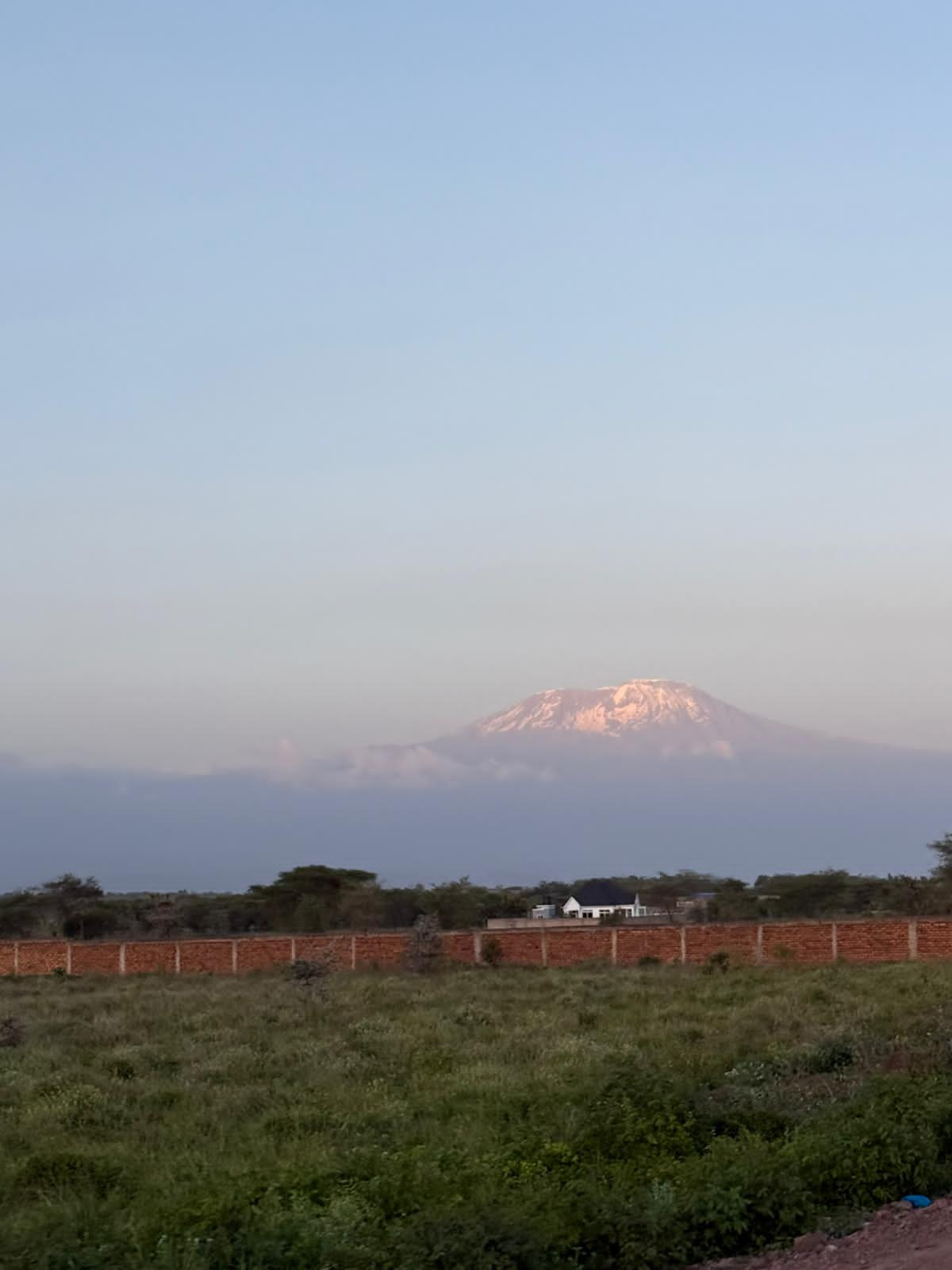
Arrive at Kilimanjaro — welcome briefing
Travel
Kilimanjaro International Airport (JRO) → hotel in Moshi or Arusha · about 1 hour by road to Arusha
Overnight
Hotel in Moshi or Arusha
Meals
No meals included — dinner available separately
Day 2

Londorossi Gate to Mti Mkubwa — the western rainforest

After breakfast we drive about three hours from Arusha to Londorossi Gate on the western side of the mountain, where you register and your crew packs the loads. A short drive brings you to the trailhead at around 2,100 m. The first walk is gentle, about three hours through beautiful, untouched rainforest where you may see colobus and blue monkeys in the trees. Very few climbers start from this side, so the trail feels peaceful. Camp tonight is Mti Mkubwa, "Big Tree", at about 2,780 m.

The western approach shares its opening trail with Lemosho before the Northern Circuit later turns towards the mountain's remote northern slopes. Montane forest shelters blue monkeys and black-and-white colobus, although sightings are never certain. Mti Mkubwa means Big Tree, a fitting name for a first camp surrounded by dense vegetation. Waterproofs belong in your daypack even during the generally drier trekking periods of January to early March and June to October. Keep your walking clothes protected inside a waterproof bag, and let the guide establish an easy rhythm from the first steps.

Londorossi Gate to Mti Mkubwa — the western rainforest
Travel
Lemosho trailhead (about 2,100 m) → Mti Mkubwa (about 2,780 m) · about 6 km · 3 hours hiking
Overnight
Mountain camp — Mti Mkubwa (about 2,780 m)
Meals
Breakfast, lunch, dinner (prepared by your mountain cook)
Day 3

Mti Mkubwa to Shira 1 — onto the plateau

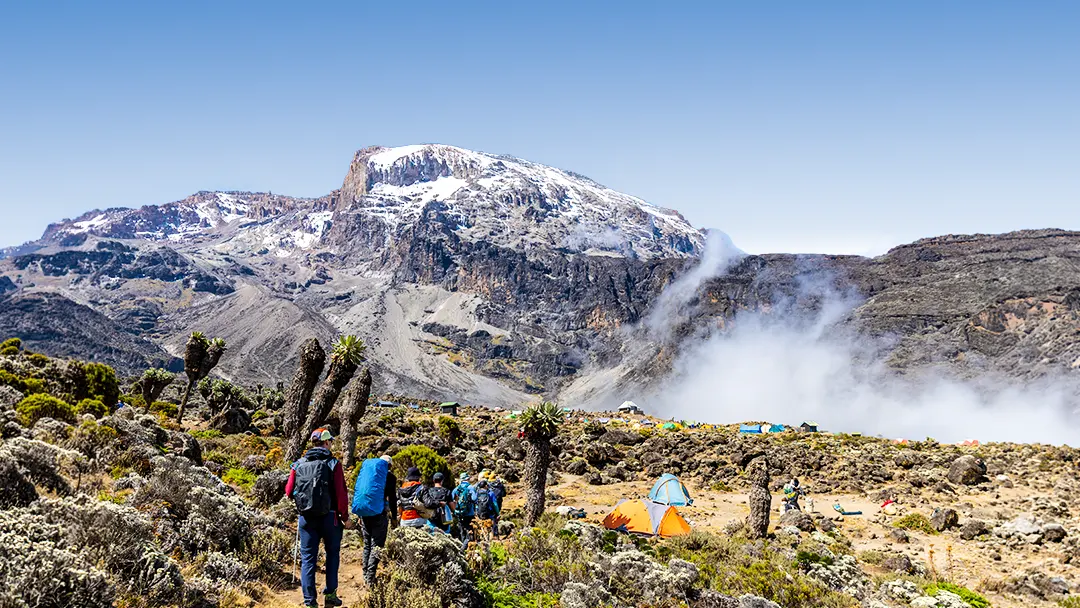
After an early breakfast, the rainforest gives way to giant heather as you climb onto the Shira Ridge, the rim of Kilimanjaro's oldest volcano. From the top, a vast high plateau opens before you, with Kibo's snowy summit at the far end. Five to six hours of steady walking bring you to Shira 1 Camp, at about 3,610 m, often in time to watch the evening light glow across the plateau. Enjoy a hot drink, a warm dinner and the starriest sky you may ever have seen.

Shira is one of Kilimanjaro's three volcanic centres, and its broad plateau is a dramatic contrast to yesterday's enclosed forest. Crossing the ridge reveals how much landscape lies between you and Kibo, rather than bringing the summit immediately within reach. The height gain today is substantial despite the unhurried pace. Protect yourself from the stronger sun with a hat, sunscreen and sunglasses, and put on a warm layer when you stop. The Northern Circuit's longer schedule provides more time to adjust, but symptoms still need prompt discussion with your guide.

Mti Mkubwa to Shira 1 — onto the plateau
Travel
Mti Mkubwa (about 2,780 m) → Shira 1 Camp (about 3,610 m) · about 8 km · 5–6 hours hiking
Overnight
Mountain camp — Shira 1 Camp (about 3,610 m)
Meals
Breakfast, lunch, dinner (prepared by your mountain cook)
Day 4

Shira 1 to Shira 2 — crossing the Shira Plateau

After an early breakfast, a gentle day of four to five hours across the open plateau lets your body settle into the altitude. You walk east over lava ridges and tough little everlasting flowers, with Kibo growing larger by the hour. Many groups take a short side trip to Shira Cathedral, a dramatic rock ridge, for extra acclimatisation and huge views back to Mount Meru. You reach Shira 2 Camp, at about 3,850 m, with plenty of time to rest, read and drink lots of water.

The Shira Plateau is a broad volcanic landscape of low vegetation, old lava and far-reaching views, rather than a uniformly flat meadow. Small rises can feel surprisingly noticeable at this altitude, so the gentler itinerary is designed around steady progress and rest. A visit towards Shira Cathedral depends on conditions and your guide's assessment; it is not something to force if you feel unwell. On clear afternoons, Mount Meru can appear beyond the western slopes. Keep a windproof layer accessible, because exposed ground cools quickly when clouds cover the sun.

Shira 1 to Shira 2 — crossing the Shira Plateau
Travel
Shira 1 Camp (about 3,610 m) → Shira 2 Camp (about 3,850 m) · about 7 km · 4–5 hours hiking
Overnight
Mountain camp — Shira 2 Camp (about 3,850 m)
Meals
Breakfast, lunch, dinner (prepared by your mountain cook)
Day 5

Shira 2 to Moir Hut via Lava Tower — climb high, sleep low

After an early breakfast, today you climb through high alpine desert to the Lava Tower, a towering plug of volcanic rock at around 4,630 m, for lunch in the thin air. Your guide keeps the pace slow and checks everyone carefully. Then, instead of heading south like most climbers, you turn north to Moir Hut Camp, at about 4,200 m, a quiet, rocky valley below the Lent Hills. Sleeping lower than you climbed helps your body adapt. A short afternoon walk up the hills behind camp gives wonderful views over the plateau.

This is where the Kilimanjaro Northern Circuit begins to separate from the busier southern itineraries. Lava Tower provides a higher point before you descend to sleep at Moir, following the useful principle of climbing high and sleeping lower. That pattern supports acclimatisation but cannot guarantee protection from altitude illness. Moir Hut is the name of the camp area; your accommodation remains a mountain tent beneath the Lent Hills. Any extra afternoon walk is guided and conditional on how you feel. Carry sun protection and warm layers together: alpine weather changes quickly.

Shira 2 to Moir Hut via Lava Tower — climb high, sleep low
Travel
Shira 2 Camp (about 3,850 m) → Moir Hut Camp (about 4,200 m) · about 14 km · 6–8 hours hiking
Overnight
Mountain camp — Moir Hut Camp (about 4,200 m)
Meals
Breakfast, lunch, dinner (prepared by your mountain cook)
Day 6

Moir Hut to Buffalo Camp — the wild north side

After an early breakfast, now you are on the true Northern Circuit, a trail very few climbers ever see. The path rolls up and down across ridges and valleys on the mountain's northern slopes, with views far across the plains to Kenya and Amboseli on clear days. It is a peaceful walk of five to seven hours often with few other trekking groups nearby. Buffalo Camp, at about 4,020 m, is a wide, open campsite where the sunset colours the whole northern sky.

Kilimanjaro's northern slopes face the broad plains towards Kenya and tend to see fewer trekking groups than the southern circuit. Buffalo Camp is a place name, not a promise of buffalo sightings, and the reward here is mainly space, geology and the unfolding mountain panorama. Repeated small ascents can make the day feel longer than the camp elevations suggest. Keep snacks within reach and maintain the same easy rhythm uphill and downhill. Wind can strip warmth during lunch stops, so put on an insulating layer before you become chilled. Your cook provides lunch and dinner, and the evening health check is a useful moment to discuss appetite, sleep and how the walking has felt.

Moir Hut to Buffalo Camp — the wild north side
Travel
Moir Hut Camp (about 4,200 m) → Buffalo Camp (about 4,020 m) · about 12 km · 5–7 hours hiking
Overnight
Mountain camp — Buffalo Camp (about 4,020 m)
Meals
Breakfast, lunch, dinner (prepared by your mountain cook)
Day 7

Buffalo Camp to Third Cave — around the mountain

After an early breakfast, the trail continues east around the northern slopes, crossing gentle ridges and valleys of moorland and alpine desert for five to six hours. Mawenzi's jagged peaks start to appear ahead, and the silence of this side of the mountain is something guests always remember. You reach Third Cave Camp, at about 3,870 m, in the afternoon. After many days above 3,500 m, you have given your body time to adjust, and tonight is about good food, warm layers and rest before the climb to high camp.

The Northern Circuit's traverse gives you changing perspectives of Kilimanjaro rather than a straight line towards the summit. Third Cave lies lower than Buffalo Camp, but the undulating trail still demands steady effort across open ground. Spending several nights at altitude creates useful acclimatisation time without guaranteeing that your body has adjusted fully. Keep the evening health check honest even if you feel pressure to continue with the group. Prepare clean, dry socks and review your warm layers tonight, leaving tomorrow's high-camp arrival as calm and uncomplicated as possible.

Buffalo Camp to Third Cave — around the mountain
Travel
Buffalo Camp (about 4,020 m) → Third Cave Camp (about 3,870 m) · about 8 km · 5–6 hours hiking
Overnight
Mountain camp — Third Cave Camp (about 3,870 m)
Meals
Breakfast, lunch, dinner (prepared by your mountain cook)
Day 8

Third Cave to School Hut — the high camp

After an early breakfast, a steady climb of four to five hours takes you up across the bare Saddle towards Kibo and on to School Hut Camp, at about 4,750 m, the high camp for the summit. The air is thin and the scenery is stark and beautiful: rock, gravel and the summit cone straight above. You arrive by early afternoon for an early dinner while your guide explains the summit plan, checks your clothing and head torch, and makes sure you are ready. Then it is into your sleeping bag to rest before midnight.

School Hut is the Northern Circuit's high-camp area, not a promise of indoor accommodation: this itinerary uses mountain tents. The Saddle's exposed terrain offers little shelter, and the reduced oxygen makes even unpacking feel slower than it does lower down. Put summit essentials together before lying down, including gloves, spare batteries, snacks and water protected against freezing. Your guide will explain the turnaround rules and assess your condition before departure. Resting quietly is worthwhile even if sleep is patchy; do not take extra acclimatisation walks without discussing them with the guide.

Third Cave to School Hut — the high camp
Travel
Third Cave Camp (about 3,870 m) → School Hut Camp (about 4,750 m) · about 5 km · 4–5 hours hiking
Overnight
Mountain camp — School Hut Camp (about 4,750 m)
Meals
Breakfast, lunch, dinner (prepared by your mountain cook)
Day 9

Summit night — Uhuru Peak, then down to Millennium Camp

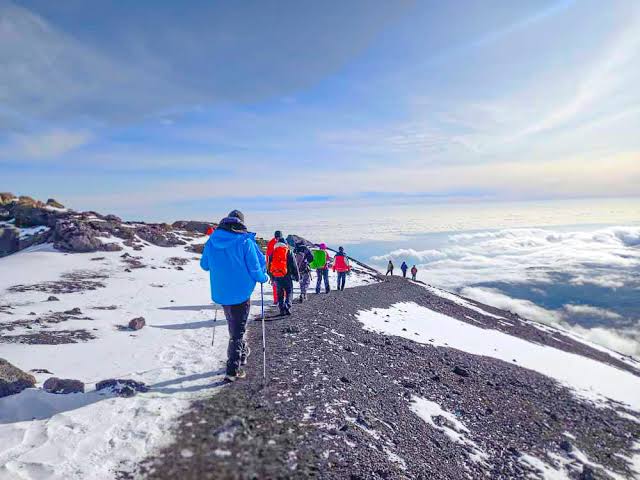
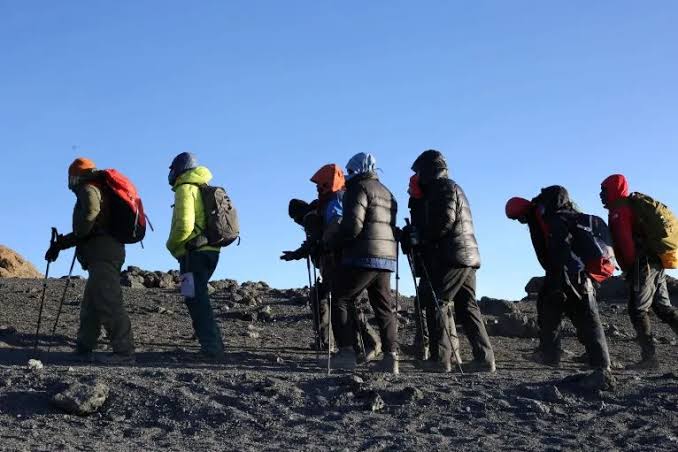
Around midnight you leave School Hut and climb the steep scree by head torch, slowly and steadily behind your guides. Near dawn you aim to reach Gilman's Point on the crater rim, at about 5,685 m, and then walk along the rim past Stella Point to Uhuru Peak, 5,895 m, the highest point in Africa, as the glaciers turn gold in the morning sun. After photos and celebrations, you descend the southern side past Barafu to Millennium Camp, at about 3,950 m. A very long day of twelve to fifteen hours, and the proudest of the trip.

This Northern Circuit summit day links the northern approach with a southern descent, completing the route's great sweep around Kilimanjaro. After Gilman's Point, the crater-rim traverse passes Stella Point before reaching Uhuru Peak if conditions and your health allow. The long descent towards Millennium requires reserves, so keep eating small snacks and drinking regularly rather than treating the summit as the finish. Sunglasses become essential once daylight reaches the scree. Your guide may shorten the attempt or turn the group around; safe descent always takes priority over summit photographs.

Summit night — Uhuru Peak, then down to Millennium Camp
Travel
School Hut Camp (about 4,750 m) → Millennium Camp (about 3,950 m) · about 18 km · 12–15 hours hiking
Overnight
Mountain camp — Millennium Camp (about 3,950 m)
Meals
Breakfast, lunch, dinner (prepared by your mountain cook)
Day 10

Millennium Camp to Mweka Gate — back to the green

After an early breakfast, with the summit behind you, the last walk is a five to six-hour descent through moorland and then lush rainforest to Mweka Gate, at about 1,640 m. Your legs feel it, but every step brings thicker air and more birdsong. At the gate you sign out of the park and collect a certificate reflecting the point you reached, and your crew of guides, cooks and porters often sends you off with a song. We drive you back to your hotel for a hot shower and time to arrange a separate celebration dinner after nine days on the mountain.

The descent from Millennium passes through several vegetation belts, bringing the Northern Circuit's wide variety of landscapes to a final, green conclusion. Forest shade can feel welcome after days on open slopes, but rain and slippery footing remain possible. Keep your waterproof jacket in your daypack instead of sending it ahead with the camp equipment, and shorten your stride on muddy steps. Any certificate reflects the point reached on your climb. Once back at your hotel, take time to dry your equipment and recover; breakfast is included, while dinner is separate.

Millennium Camp to Mweka Gate — back to the green
Travel
Millennium Camp (about 3,950 m) → Mweka Gate (about 1,640 m) · about 15 km · 5–6 hours hiking
Overnight
Hotel in Moshi or Arusha
Meals
Breakfast, lunch (prepared by your mountain cook)
Day 11

Departure — or on to safari or Zanzibar

After breakfast at your hotel, enjoy a slow morning while your legs recover from the mountain. If your flight schedule allows, ask about an optional coffee farm visit or a little souvenir shopping in Moshi or Arusha; neither is an included excursion. We confirm your collection time and transfer you to Kilimanjaro International Airport (JRO) for your onward flight. From Arusha, allow about one hour on the road, plus the airline's recommended check-in time and a sensible traffic buffer. For an evening departure, keep the afternoon flexible rather than planning a distant outing that could make the journey rushed.

Arusha sits beneath Mount Meru and makes a pleasant place to pause after your Kilimanjaro trek, with cafés and local markets if you feel like a short walk. JRO is the airport here for international flights, so check the airport name carefully when reviewing your ticket. Keep travel documents, medication and a change of clothing accessible rather than buried with your muddy trekking kit. Additional safari days or a Zanzibar beach holiday can be arranged separately, but this package finishes with your airport transfer. Before leaving the hotel, check the room for charging cables and allow time to collect any luggage stored during the climb.

Departure — or on to safari or Zanzibar
Travel
Hotel in Moshi or Arusha → Kilimanjaro International Airport (JRO) · about 1 hour by road from Arusha
Overnight
End of trip — no overnight
Meals
Breakfast

Make your dream trip come true with Lion Whisper

Every sample itinerary can be changed to suit you. Our local guides work with you to plan the trip you really want.

Request this trip now

Why Lion Whisper?

  • Private guide and vehicle — never a shared group
  • Local guides based in Arusha
  • Routes built around your dates and pace
  • Honest advice, no sales script
  • English-speaking guides
  • 24/7 support while you travel
See all kilimanjaro trekking
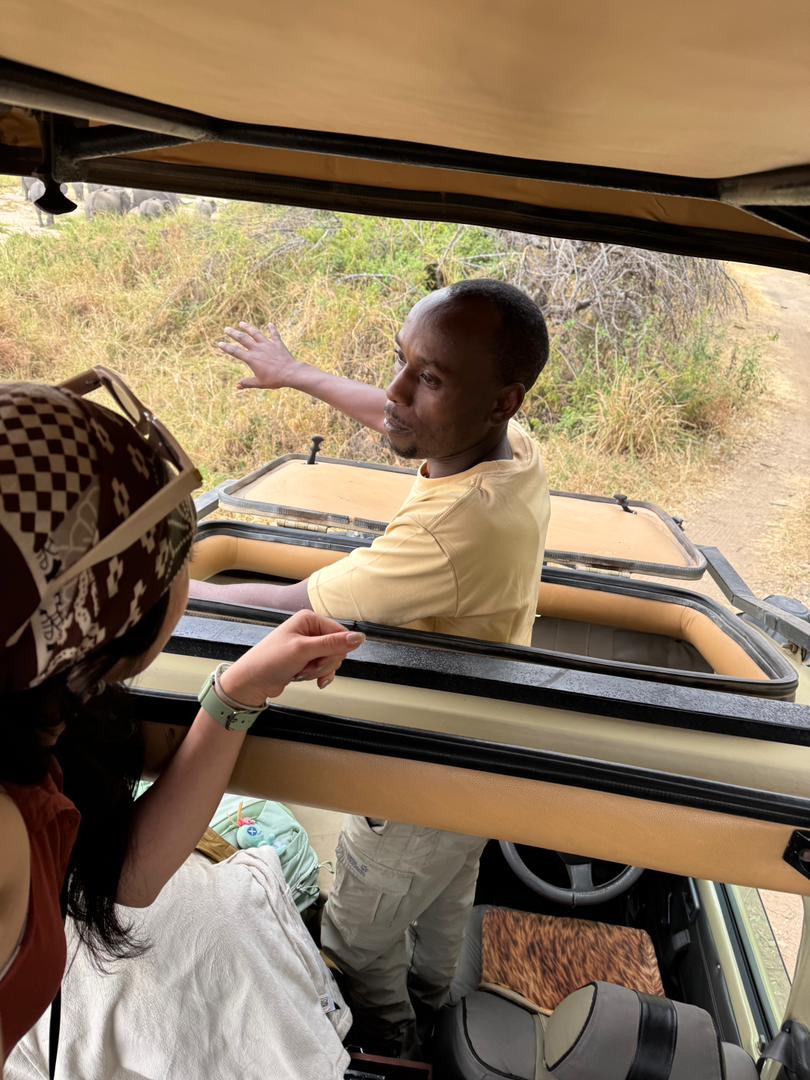
Lion Whisper guide explaining wildlife from the safari vehicle

Let us create your tailor-made trip

Free, no-obligation advice

Plan a Custom Safari

Talk to a local guide

Our team in Arusha is here to help — English · Swahili · French (on request).