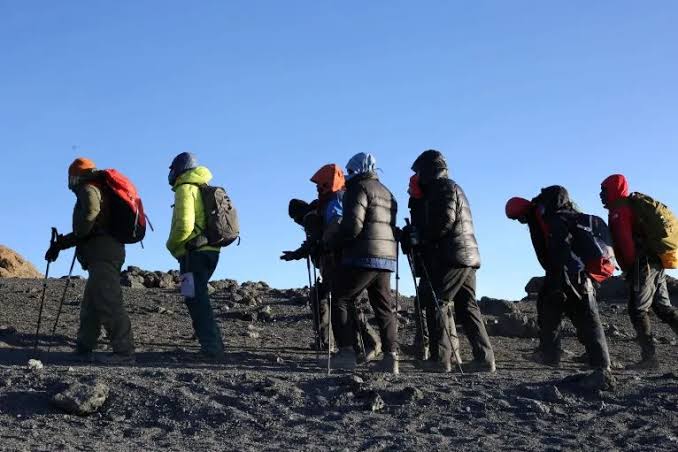
• Kilimanjaro trek

Kilimanjaro Lemosho Route

Kilimanjaro trek · 8 days on the mountain / 10 days / 9 nights

Private, tailor-made and planned by local guides in Arusha.

  1. Home
  2. Kilimanjaro Trekking
  3. Kilimanjaro Lemosho Route
Back to Home

Kilimanjaro Lemosho Route

A quieter, wilder approach from the western side, crossing the whole Shira Plateau before joining the southern circuit — eight days on the mountain for the best chance of reaching the top.

  • Remote western rainforest with fewer climbers
  • Walk the full length of the Shira Plateau
  • Eight days for excellent acclimatisation
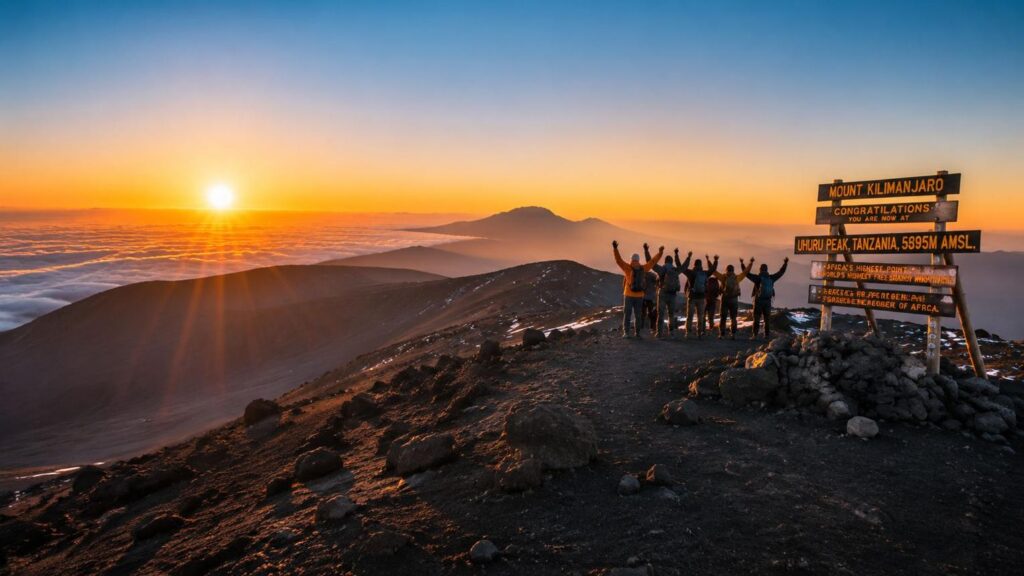
  • Sunrise on Uhuru Peak, 5,895 m

Make your dream trip come true with Lion Whisper

Every sample itinerary can be changed to suit you. Our local guides work with you to plan the trip you really want.

Request this trip now

Itinerary

  1. Day 1: Arrive at Kilimanjaro — meet your guide
  2. Day 2: Londorossi Gate to Mti Mkubwa — the western forest
  3. Day 3: Mti Mkubwa to Shira 1 — onto the plateau
  4. Day 4: Shira 1 to Shira 2 — crossing the Shira Plateau
  5. Day 5: Shira 2 to Barranco via Lava Tower — climb high, sleep low
  6. Day 6: Barranco Wall to Karanga Camp — hands on the rock
  7. Day 7: Karanga to Barafu Camp — final preparations
  8. Day 8: Summit night — Uhuru Peak, then down to Mweka Camp
  9. Day 9: Mweka Camp to Mweka Gate — back to the green
  10. Day 10: Departure — or continue to safari or the beach
Kilimanjaro Lemosho Route — route photo
Route at a glance
  1. Kilimanjaro Airport
  2. Londorossi Gate
  3. Shira Plateau
  4. Barranco Wall
  5. Uhuru Peak
  6. Mweka Gate
  7. Kilimanjaro Airport
Day 1

Arrive at Kilimanjaro — meet your guide

We meet you at Kilimanjaro International Airport (JRO) and drive you to your hotel in Moshi or Arusha. After a chance to rest, your lead guide comes by for a full briefing: how each day on the Lemosho route unfolds, what the camps are like, how we check your health morning and evening, and why walking slowly is the real secret to success. Together you go through your kit, and anything missing can be hired in town. Arrange a relaxed dinner and your last night in a proper bed for a while.

Kilimanjaro International Airport (JRO) is the international arrival point for this journey; the transfer to Arusha takes about an hour. Arusha is a busy northern Tanzanian town beneath Mount Meru, whose outline may appear between the clouds. Your hotel stay includes breakfast; dinner this evening is at your own arrangement. Keep essential medicines and tomorrow’s walking clothes in your hand luggage in case checked bags are delayed. January to early March and June to October usually offer the best trekking conditions, although mountain weather can change quickly. Tonight, organise your daypack and tell your guide about any health concerns before the climb begins.
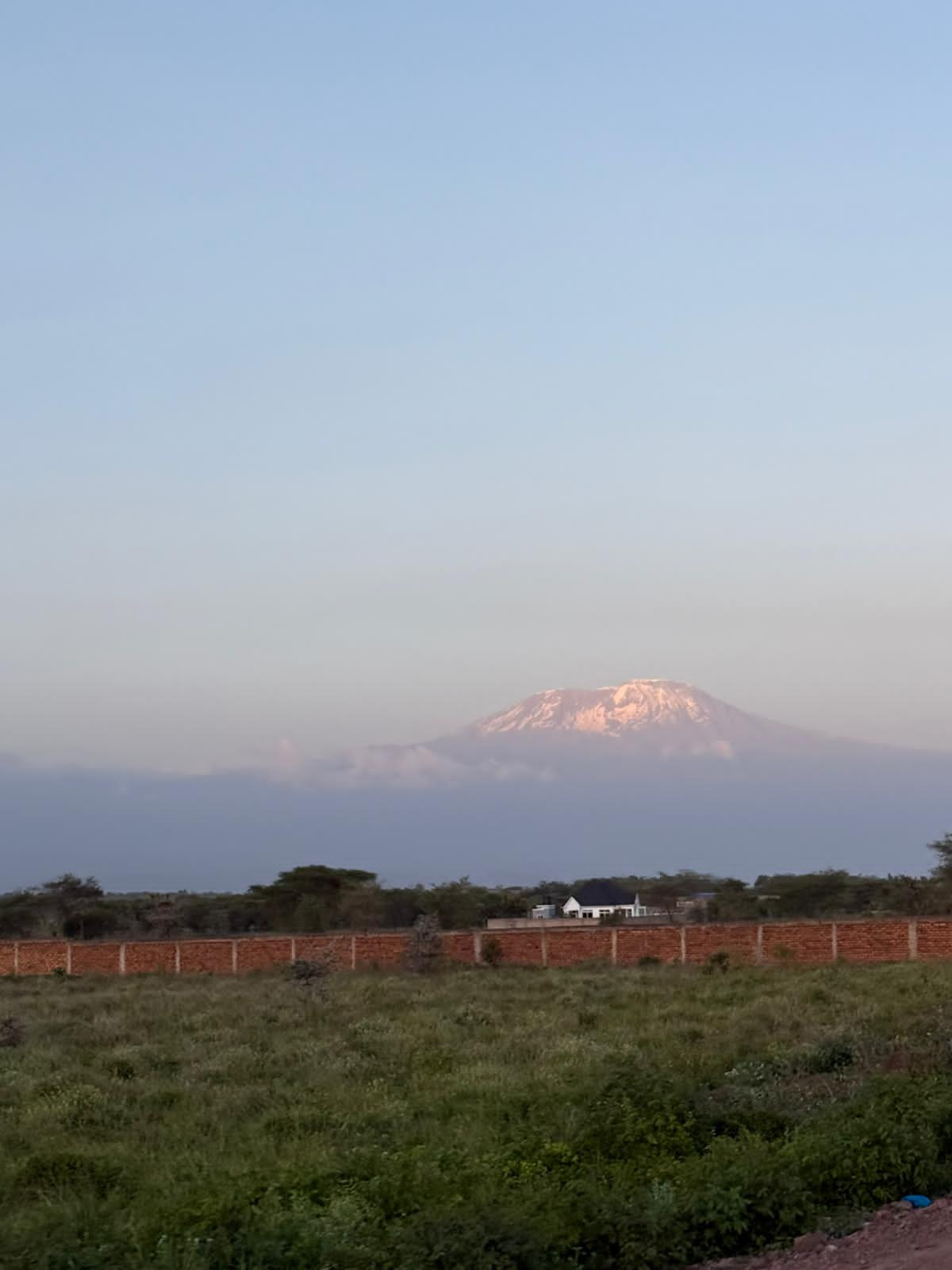
Arrive at Kilimanjaro — meet your guide
Travel
Kilimanjaro International Airport (JRO) → hotel in Arusha or Moshi · about 1 hour by road to Arusha
Overnight
Hotel in Moshi or Arusha
Meals
Not included — dinner at your own arrangement
Day 2

Londorossi Gate to Mti Mkubwa — the western forest

After breakfast it is a long, scenic drive of about three hours from Arusha to Londorossi Gate on the mountain's western flank, where you register and your crew packs the loads. A short drive brings you to the Lemosho trailhead at around 2,100 m. The first walk is short and gentle, about three hours through beautiful, untouched rainforest where you may hear blue monkeys and black-and-white colobus overhead. Few climbers start from this side, so the trail feels wonderfully quiet. Camp tonight is Mti Mkubwa — "Big Tree" — at about 2,780 m. You pause for lunch along the way or after arrival, depending on the day’s pace and your guide’s plan.

Kilimanjaro’s montane forest catches moisture from passing cloud, making this lower belt much greener than the slopes above. Rain can arrive even during the generally drier trekking periods of January to early March and June to October. Keep your waterproof jacket accessible rather than buried in the porter bag, and protect spare clothing inside a dry liner. Your mountain cook prepares lunch and dinner, while guides check how you are adjusting to the first climb. Walking slowly from the start is more useful than rushing to reach the overnight stop; the aim today is a comfortable rhythm, not speed.

Londorossi Gate to Mti Mkubwa — the western forest
Travel
Lemosho trailhead (2,100 m) → Mti Mkubwa Camp (2,780 m) · about 6 km · 3 hours hiking
Overnight
Mountain camp — Mti Mkubwa Camp (about 2,780 m)
Meals
Breakfast, lunch, dinner (prepared by your mountain cook)
Day 3

Mti Mkubwa to Shira 1 — onto the plateau

After breakfast, you set out at the steady pace agreed with your guide. the rainforest thins into giant heather and the trail climbs steadily onto the Shira Ridge, the rim of Kilimanjaro's oldest, collapsed volcano. From the top you look across a vast high plateau dotted with moorland flowers, with Kibo's snowy summit rising at the far end. It feels like walking into another world. Five to six hours on the trail bring you to Shira 1 Camp at around 3,610 m, often in time to watch the light fade over the plateau with a hot drink in your hands. You pause for lunch along the way or after arrival, depending on the day’s pace and your guide’s plan.

This transition into Kilimanjaro’s moorland is one of the mountain’s most rewarding changes of scenery. Heather, tussock grasses and hardy highland plants replace the sheltered forest, while cloud can sweep across exposed slopes without warning. The open views do not mean the walking is easy: the altitude makes an unhurried pace increasingly important. Keep a warm layer and waterproof shell in your daypack, and apply sun protection even when the air feels cool. Your guide’s morning and evening health checks are opportunities to mention a headache, nausea or poor appetite promptly, rather than waiting until the next stage.

Mti Mkubwa to Shira 1 — onto the plateau
Travel
Mti Mkubwa Camp (2,780 m) → Shira 1 Camp (3,610 m) · about 8 km · 5–6 hours hiking
Overnight
Mountain camp — Shira 1 Camp (about 3,610 m)
Meals
Breakfast, lunch, dinner (prepared by your mountain cook)
Day 4

Shira 1 to Shira 2 — crossing the Shira Plateau

After breakfast, you set out at the steady pace agreed with your guide. a gentler day across the plateau lets your body settle into the altitude. The trail runs east over open ground, past lava formations and tough little everlasting flowers, with Kibo growing larger with every hour. Some groups take a short side walk to Shira Cathedral, a dramatic ridge of rock, for extra acclimatisation and huge views. After four to five hours you reach Shira 2 Camp at about 3,850 m, near the shared southern approach. Rest, eat well and enjoy the sunset over Mount Meru. You pause for lunch along the way or after arrival, depending on the day’s pace and your guide’s plan.

The Shira Plateau preserves part of Kilimanjaro’s older volcanic landscape, a broad contrast to the steep forest approach. The openness is deceptive: sunshine can be strong even when the breeze feels cold, and mist may hide the route’s distant landmarks. Keep sunglasses, sun cream and an extra layer within reach. This slower stage on the Kilimanjaro Lemosho Route gives you time to settle into the altitude rather than chase distance. Any additional acclimatisation walk depends on your guide’s assessment and the conditions. Eat lunch, rest afterwards and mention even mild changes in how you feel during the regular health checks.

Shira 1 to Shira 2 — crossing the Shira Plateau
Travel
Shira 1 Camp (3,610 m) → Shira 2 Camp (3,850 m) · about 7 km · 4–5 hours hiking
Overnight
Mountain camp — Shira 2 Camp (about 3,850 m)
Meals
Breakfast, lunch, dinner (prepared by your mountain cook)
Day 5

Shira 2 to Barranco via Lava Tower — climb high, sleep low

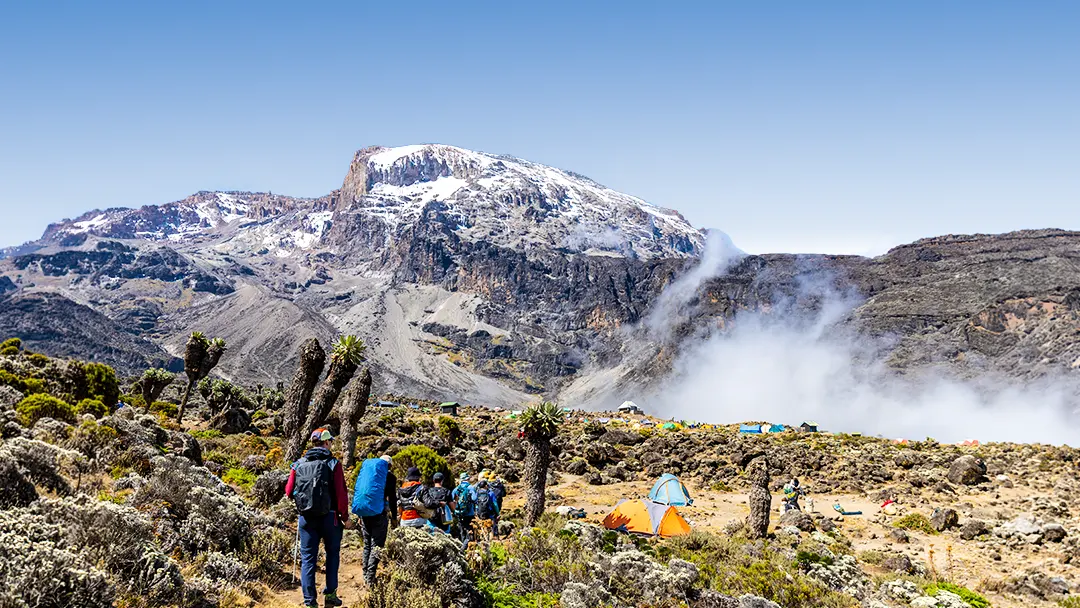
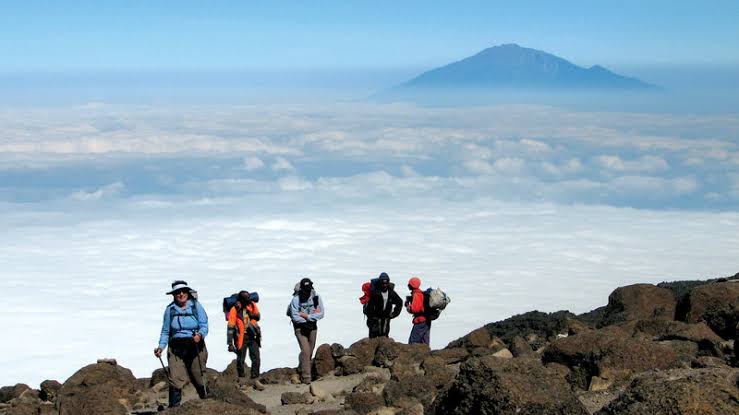
After breakfast, you set out at the steady pace agreed with your guide. this is the key acclimatisation day. You walk up through high alpine desert to the Lava Tower, a towering plug of volcanic rock at around 4,630 m, for lunch in the thin mountain air. Your guide keeps the pace slow and checks how everyone is feeling. In the afternoon you descend into the beautiful Barranco Valley, past strange giant groundsels and small mountain watercourses, to sleep at Barranco Camp, about 3,960 m. The rule is simple — climb high, sleep low — although your guide still needs to monitor how you feel.

Lava Tower is a striking reminder that Kilimanjaro is a volcanic mountain, with bare rock above and remarkable giant groundsels in the more sheltered valley below. This higher excursion followed by a lower sleeping altitude supports acclimatisation, but it cannot prevent altitude illness. Tell your guide immediately about headaches, nausea, dizziness or unusual breathlessness; do not assume discomfort is something to push through. Keep sun protection, a warm layer and waterproofs handy, as exposed sections can feel hot in sunshine and suddenly cold in cloud. Eat what you comfortably can at lunch and take the descent slowly on tired legs.

Shira 2 to Barranco via Lava Tower — climb high, sleep low
Travel
Shira 2 Camp (3,850 m) → Barranco Camp (3,960 m), via Lava Tower (4,630 m) · about 10 km · 6–8 hours hiking
Overnight
Mountain camp — Barranco Camp (about 3,960 m)
Meals
Breakfast, lunch, dinner (prepared by your mountain cook)
Day 6

Barranco Wall to Karanga Camp — hands on the rock

After breakfast, you set out at the steady pace agreed with your guide. the day starts with the Barranco Wall, a steep cliff of about 250 metres that turns out to be a fun, non-technical scramble with plenty of handholds. Your guides stay close and show you every step, and the views back over the valley and the clouds are breathtaking. From the top, the trail dips in and out of rocky valleys to Karanga Camp at about 3,995 m, reached around lunchtime. The afternoon is free to rest, read and drink lots of water — part of the plan for a strong summit night.

The Barranco Wall is a memorable feature of Kilimanjaro’s southern circuit, but it deserves patience rather than bravado. Some sections require your hands for balance, and your guide will help you choose secure footholds. Keep trekking poles stowed during the scramble so both hands are free, and allow working porters space to pass safely. Beyond the wall, the valleys make this a more varied walk than the modest change in sleeping altitude suggests. Lunch and an unhurried afternoon at Karanga leave time to recover, eat and discuss any symptoms during the regular health checks; acclimatisation is never guaranteed.

Barranco Wall to Karanga Camp — hands on the rock
Travel
Barranco Camp (3,960 m) → Karanga Camp (3,995 m) · about 5 km · 4–5 hours hiking
Overnight
Mountain camp — Karanga Camp (about 3,995 m)
Meals
Breakfast, lunch, dinner (prepared by your mountain cook)
Day 7

Karanga to Barafu Camp — final preparations

A shorter walk of three to four hours over bare, rocky ground takes you up to Barafu Camp at about 4,673 m, the base for the summit. Up here, there is little more than rock, sky and the glaciers of Kibo straight above. You eat an early dinner while your guide briefs you on the night ahead: what to wear, how to keep your water from freezing and how slowly you will walk. Then it is into your sleeping bag by early evening for a few hours of rest before the midnight wake-up call. You pause for lunch along the way or after arrival, depending on the day’s pace and your guide’s plan.

The alpine desert around the summit base is exposed, with very little vegetation to soften the volcanic landscape. Altitude, wind and cold make simple tasks slower, so prepare carefully while there is still daylight. Pack spare head-torch batteries, accessible snacks and insulated drinking water, and check that gloves and warm layers can be reached without emptying your bag. Your guide will explain the turnaround decision and remind you that reaching Uhuru Peak is never guaranteed. Report any worsening symptoms before trying to rest; the team’s health checks support judgement, but they do not replace telling your guide how you actually feel.

Karanga to Barafu Camp — final preparations
Travel
Karanga Camp (3,995 m) → Barafu Camp (4,673 m) · about 4 km · 3–4 hours hiking
Overnight
Mountain camp — Barafu Camp (about 4,673 m)
Meals
Breakfast, lunch, dinner (prepared by your mountain cook)
Day 8

Summit night — Uhuru Peak, then down to Mweka Camp

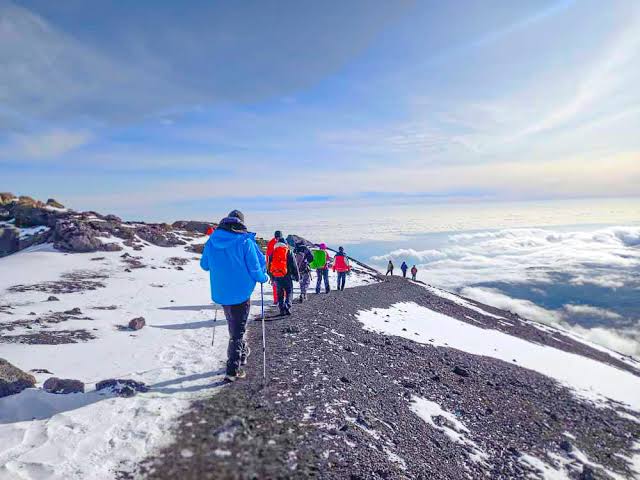
You leave camp around midnight in a line of head torches, climbing the long scree slope in the cold and dark, step by slow step. Your guides keep a steady rhythm, offering hot tea and encouragement. As the sky turns orange you reach Stella Point on the crater rim at about 5,756 m, and the final walk along the rim brings you to Uhuru Peak, 5,895 m, the roof of Africa, with glaciers glowing beside you. After photos and a few tears, you descend to Barafu for a rest and then on to Mweka Camp at around 3,100 m. It is a very long day — twelve to sixteen hours — and the proudest of the trip. You pause for lunch along the way or after arrival, depending on the day’s pace and your guide’s plan.

Uhuru Peak is Africa’s highest point, but safe decisions matter more than a summit photograph. Your guide assesses your condition throughout the ascent and may turn you around before the crater rim or summit. The descent also demands concentration, especially on loose scree when your legs are tired. Keep your face and hands protected from the cold, take small amounts of food and water when you can, and keep essential layers accessible. Sunrise timings and visibility vary with conditions and pace, so treat views of the glaciers as a possibility rather than a promise. Dinner and rest await at the lower overnight stop.

Summit night — Uhuru Peak, then down to Mweka Camp
Travel
Barafu Camp (4,673 m) → Mweka Camp (3,100 m), via Uhuru Peak (5,895 m) · about 17 km · 12–16 hours hiking
Overnight
Mountain camp — Mweka Camp (about 3,100 m)
Meals
Breakfast, lunch, dinner (prepared by your mountain cook)
Day 9

Mweka Camp to Mweka Gate — back to the green

After breakfast, you set out at the steady pace agreed with your guide. breathing feels easy again as you walk three to four hours down through lush rainforest to Mweka Gate at about 1,640 m, with birdsong all around. At the gate you sign out of the park and receive any certificate earned, and your crew of guides, cooks and porters says goodbye, often with a song. We drive you back to your hotel for a hot shower, a cold drink and time to arrange a well-earned celebration dinner — eight days on the mountain, and a story for life. You pause for lunch along the way or after arrival, depending on the day’s pace and your guide’s plan.

Returning through Kilimanjaro National Park’s lower vegetation zones lets you notice details that may have passed in the excitement of the ascent: damp bark, fern fronds and calls from the canopy. Rainforest paths can be slippery, so keep your boots on and use poles carefully rather than rushing towards the gate. Certificates reflect the highest recognised point reached and are not a promise of summit success. Before leaving the trail, check that you have your personal belongings and any rubbish from your daypack. Your hotel stay includes breakfast; the evening meal is arranged separately, leaving you free to celebrate in your own way.

Mweka Camp to Mweka Gate — back to the green
Travel
Mweka Camp (3,100 m) → Mweka Gate (1,640 m) · about 10 km · 3–4 hours hiking
Overnight
Hotel in Moshi or Arusha
Meals
Breakfast, lunch (prepared by your mountain cook); dinner at your own arrangement
Day 10

Departure — or continue to safari or the beach

After a lazy breakfast, take the morning to rest, visit a coffee farm or pick up a few souvenirs in Moshi or Arusha, depending on your flight time. We then drive you to Kilimanjaro International Airport for your journey home.

Kilimanjaro International Airport (JRO) handles international departures, and the drive from Arusha takes about an hour. If you have an evening flight, we plan the collection time around check-in requirements and road conditions rather than filling every spare hour. Arusha sits below Mount Meru, and a quiet café stop can be a pleasant final glimpse of town if your schedule allows. Keep your passport, travel documents and any medication close to hand, with dusty boots packed separately from clean clothing. Breakfast is included at your hotel; additional meals and optional visits are arranged separately. Allow yourself a gentle day after the physical demands of the mountain. Keep the afternoon unhurried and ask your guide about the next stage, so you can prepare without sacrificing valuable rest. Leave some room in your luggage for the memories and small keepsakes of your time in Tanzania.

Departure — or continue to safari or the beach
Travel
Hotel in Arusha or Moshi → Kilimanjaro International Airport (JRO) · about 1 hour by road from Arusha
Overnight
End of trip — no overnight
Meals
Breakfast

Make your dream trip come true with Lion Whisper

Every sample itinerary can be changed to suit you. Our local guides work with you to plan the trip you really want.

Request this trip now

Why Lion Whisper?

  • Private guide and vehicle — never a shared group
  • Local guides based in Arusha
  • Routes built around your dates and pace
  • Honest advice, no sales script
  • English-speaking guides
  • 24/7 support while you travel
See all kilimanjaro trekking
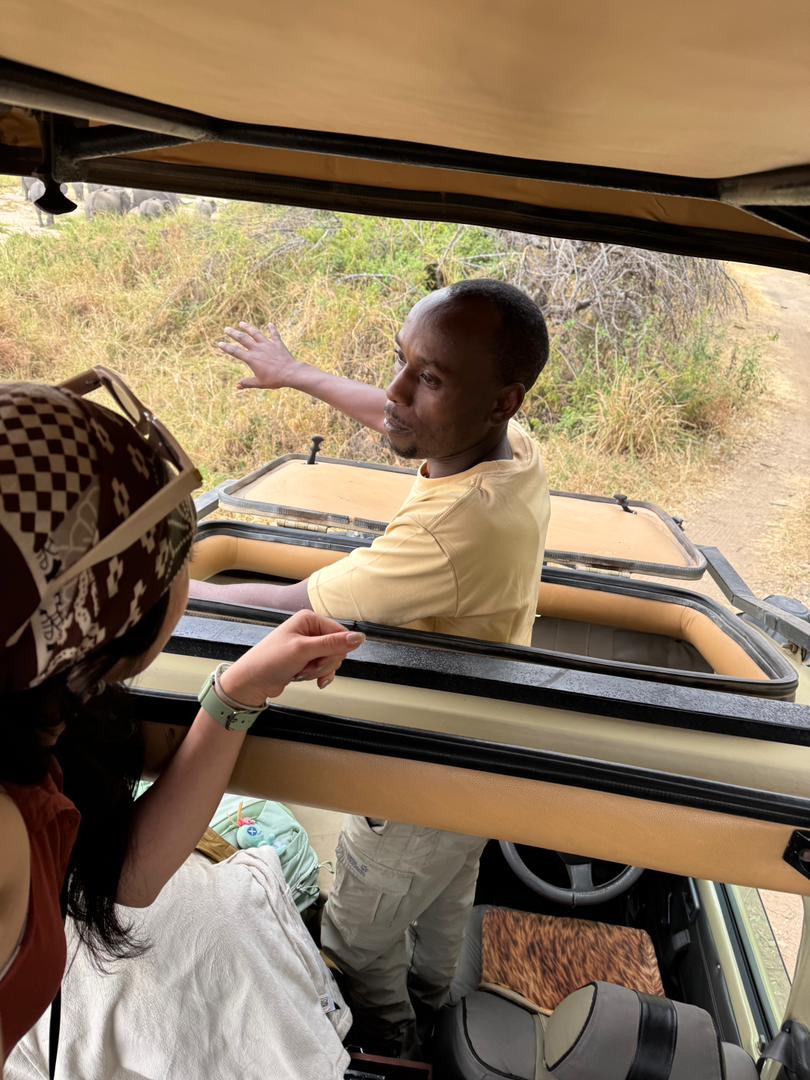
Lion Whisper guide explaining wildlife from the safari vehicle

Let us create your tailor-made trip

Free, no-obligation advice

Plan a Custom Safari

Talk to a local guide

Our team in Arusha is here to help — English · Swahili · French (on request).